

Can Virtual Color Analysis Really Work From Photos?
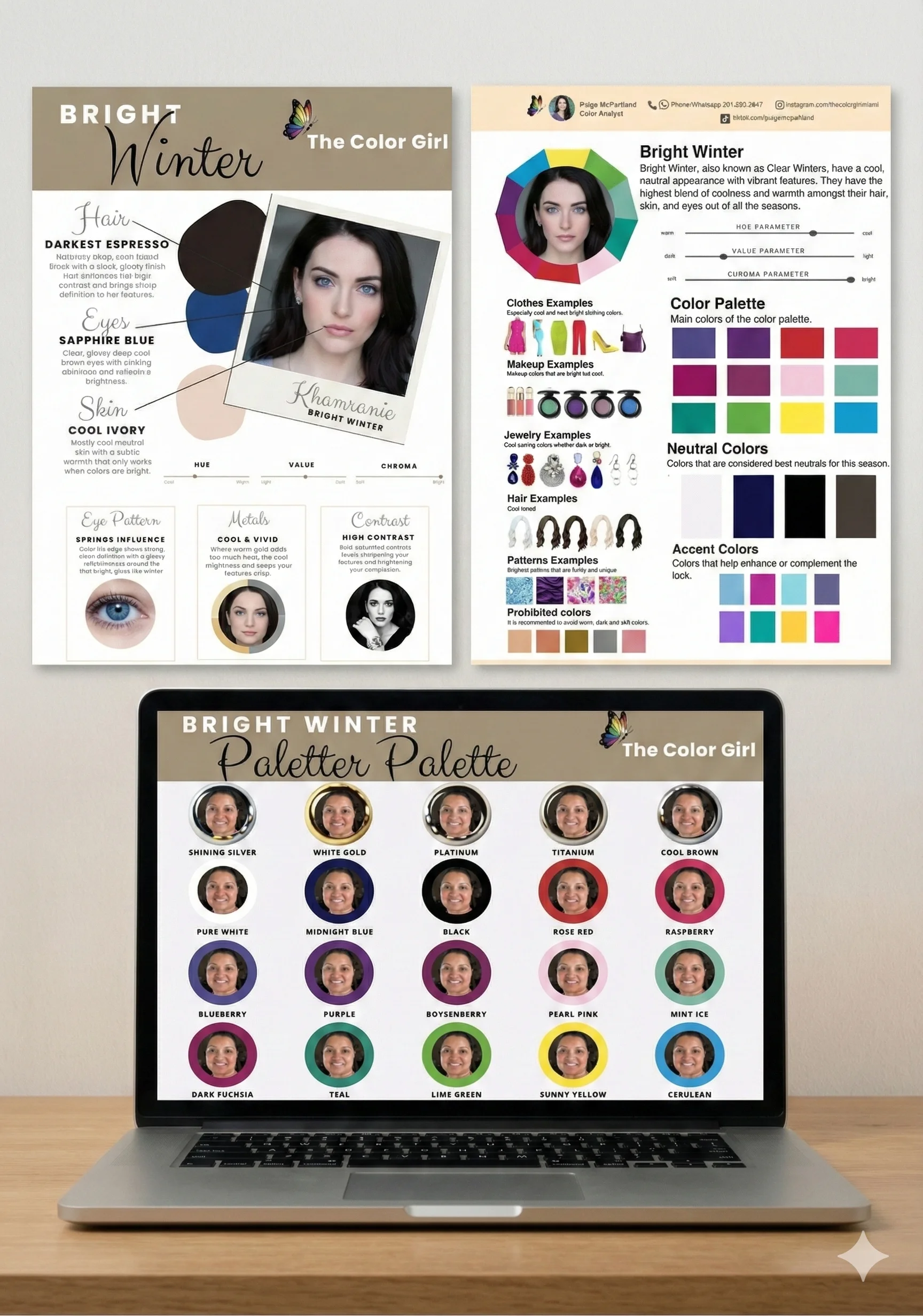
Yes, virtual color analysis can work from clear, makeup-free photos. Learn what an expert looks for, which photos matter, and where the limits are.
Short answer: Yes. Virtual color analysis can work from photos when the images are clear, makeup-free, taken in natural light, and reviewed by a trained human. The quality of the result depends on both the photos and the method used to interpret them.
It is completely reasonable to wonder how someone can analyze your coloring without sitting across from you with physical drapes. A camera can shift color. A bathroom bulb can make warm skin look yellow. A phone can brighten shadows before you ever see the picture.
Those limitations are real, but they do not make virtual analysis impossible. They mean the process needs good photo instructions, more than one image, and a careful analyst who knows what to compare.
What a virtual color analyst can see in photos
Seasonal color analysis is not based on one feature, such as blue eyes or brown hair. An analyst looks at the relationship between your skin, eyes, hair, and different groups of color.
The main qualities are:
- Temperature: whether warmer or cooler colors create better harmony with your skin
- Value: whether your coloring is best supported by lighter, medium, or deeper colors
- Intensity: whether you need clear, vivid color or softer, more muted color
- Contrast: how much difference exists among your natural features, and how much contrast your outfits can carry
A useful virtual process digitally compares your face with controlled color groups. The analyst is not simply labeling the visible color of your eyes or guessing from your veins. She is watching what changes around your face when the color changes.
Does the skin look clearer? Do shadows under the eyes become more noticeable? Does the color support you, or does it arrive in the room first? Those comparisons are more useful than a single feature checklist.
The photos matter more than the camera
You do not need professional photography. A recent phone camera is usually enough. What matters is giving the analyst a view of your natural coloring without extra color casts.
For the most useful photos:
- Stand near a window in indirect daylight.
- Turn off indoor lights, including warm vanity bulbs.
- Remove makeup, tinted sunscreen, and self-tanner if possible.
- Avoid beauty filters, portrait effects, and edited exposure.
- Pull dyed hair away from the face if it is very different from your natural color.
- Wear a neutral top or place a neutral towel around your shoulders.
- Submit several photos so one unusual camera adjustment does not control the result.
Direct sun is not ideal. It can create sharp shadows and make the skin look warmer than it is. A shaded window or bright covered porch often gives a more balanced image.
If every photo looks dramatically different, a careful analyst should ask for replacements rather than force a conclusion from unreliable information.
Why multiple photos are better than one selfie
One selfie is a snapshot of one lighting condition, one camera setting, and one angle. Several photos create a pattern.
An analyst can compare what remains consistent across the set. If your skin reads neutral-cool in four natural-light photos but unusually golden in one image taken beside a beige wall, that outlier has context. Multiple images also make it easier to see natural eye color, hair depth, facial contrast, and surface redness without treating any one detail as the whole answer.
This is one reason a social media comment that assigns a season from a single filtered photo should be treated as entertainment, not a final analysis.
What digital draping actually does
Physical draping places colored fabrics under the face. Digital draping creates a controlled version of that comparison on a consistent photo.
The analyst can compare warm and cool colors, light and deep colors, and muted and bright colors without changing the subject. Keeping the same face and lighting helps isolate the effect of the color around it.
Digital draping is most useful when the analyst evaluates the full sequence, not one favorite shade. A person might look lovely in both teal and berry, for example. The larger question is which family of teals, berries, neutrals, metals, and makeup tones creates the most consistent harmony.
Where virtual color analysis has limits
A trustworthy answer includes the limits.
Photos do not reproduce color perfectly. Screens differ. Cameras process skin tones. Reflected light from a wall or shirt can affect the face. Some people also sit very close to the boundary between two neighboring seasons.
Virtual analysis may not be the right first choice if:
- You cannot take clear photos in neutral natural light
- Your current photos all have filters or heavy makeup
- A medical treatment or temporary skin condition is significantly changing your coloring
- You specifically want the live experience of seeing fabric drapes change your face in real time
In those cases, an in-person color analysis in Miami may feel more reassuring.
The virtual option is especially practical when travel is difficult, scheduling is tight, or you want a report you can revisit while shopping. The goal is not to claim that a camera is flawless. The goal is to use a careful process that accounts for its weaknesses.
What you should receive at the end
A season name alone is not enough to make the analysis useful. You should understand why the result fits and how to use it.
A complete result can include:
- Your season and dominant color qualities
- Examples of your strongest colors and less supportive colors
- A personal digital palette
- Clothing, neutral, metal, and pattern guidance
- Makeup color direction
- Hair color guidance
- Visual comparison pages that explain the decision
The Color Girl's virtual color analysis is personally reviewed by Paige and delivered as a detailed digital report. The standard process uses clear, makeup-free photos, digital draping, and a palette designed for real decisions, not just a label.
How to judge a virtual service before you buy
Ask these questions:
- Is a trained person reviewing the photos, or is the result fully automated?
- Does the service request multiple natural-light photos?
- Will you see the reasoning behind the result?
- Does the report include practical guidance for wardrobe and makeup?
- Is there a clear path for questions if the result surprises you?
If the process only asks for one selfie and instantly returns a season, treat it as a starting point. If it gathers better evidence and explains the conclusion, it can offer much more confidence.
Frequently asked questions
Can a color analyst tell my undertone from a photo?
An analyst can assess undertone from a well-made set of photos by comparing how the skin responds to warmer and cooler color groups. It is less reliable to label undertone from one isolated selfie or one feature such as vein color.
Should my hair be visible?
Your natural hair color is useful information. If your hair is dyed, include any available photo of your natural color and pull the current color back from your face for the main images. Your skin response should remain central to the analysis.
Can I wear makeup in my photos?
Makeup can change visible contrast, redness, and temperature. Makeup-free photos give the analyst a cleaner starting point.
Is virtual color analysis the same as an AI color analysis?
Not necessarily. A virtual service describes where the analysis happens. It may be completed by a person, by software, or by a combination of both. The Color Girl's paid virtual analysis is personally reviewed by Paige. You can read the full comparison in AI Color Analysis vs. Human Color Analysis.
The bottom line
Virtual color analysis can work well from photos when the process respects the limitations of photography. Clear images, several lighting references, controlled comparisons, and trained human judgment all matter.
If you want to see exactly what the process includes, learn how The Color Girl's virtual analysis works. If you already have good natural-light photos and are ready for a personal result, book your virtual color analysis.
Ready to Discover Your Perfect Colors?
Transform your style with personalized color analysis. Book your session today and see the difference the right colors can make.
Keep Reading
 virtual color analysis
AI Color Analysis vs. Human Color Analysis: What's the Difference?
Aug 20, 2026
 virtual color analysis
Why Does Every Color Analysis Quiz Give Me a Different Season?
Aug 18, 2026
 virtual color analysis
What Hair Color Will Suit Me Best, and Should I Get a Color Analysis First?
Aug 16, 2026