
AI Color Analysis vs. Human Color Analysis: What's the Difference?
Compare AI color analysis with expert human review, including speed, photo requirements, limitations, and which option fits your goal.
Short answer: AI color analysis is fast and useful for exploration. Human color analysis adds context, comparison, and professional judgment. If you want ideas, an AI estimate can be fun. If you plan to change your wardrobe, makeup, or hair based on the answer, personal review gives you a more considered result.
You can upload a selfie to an app or ask a general AI tool to guess your season in seconds. That accessibility is exciting. It also creates a new problem: three tools can study the same face and return three different seasons.
The difference is not simply technology versus tradition. It is the difference between a quick prediction and a guided decision.
AI and human analysis at a glance
| Question | AI color analysis | Human color analysis | | --- | --- | --- | | How fast is it? | Often instant | Requires review time | | What does it use? | Image data, prompts, or a trained model | Photos or live draping, plus visual comparison and context | | Can it ask for a better photo? | Sometimes, depending on the tool | Yes, when the analyst sees unreliable lighting or missing detail | | Does it explain uncertainty? | Quality varies widely | A careful analyst can discuss close calls and neighboring seasons | | Is the advice personal? | Often based on a category or generated estimate | Can be adapted to your features, goals, current hair, and makeup needs | | Best use | Learning vocabulary and exploring possibilities | Making a confident, practical style plan |
Neither column means every product or analyst is equally good. A thoughtful AI experience can be more helpful than a rushed human opinion. A skilled analyst with a repeatable method can offer something an instant result cannot: accountability for the conclusion.
How AI color analysis works
An AI tool looks for visual patterns in an image and maps them to the categories it has been instructed or trained to use. Depending on the product, it may estimate skin temperature, eye color, hair depth, contrast, or likely season.
That makes AI useful for questions such as:
- What are the basic differences between Summer and Winter?
- Which colors are usually associated with Soft Autumn?
- What should I test if I think I am Bright Spring?
- Can you give me outfit ideas for a cool, muted palette?
The challenge is that the tool sees a processed image, not your face in neutral conditions. It may also rely too heavily on obvious feature labels. Brown eyes do not automatically mean Autumn. Pale skin does not automatically mean Summer. Warm surface redness does not automatically mean a warm undertone.
An answer can sound polished while the input is poor. Confidence in the wording is not proof that the season is correct.
What a human analyst adds
A human analyst can notice when the evidence is fighting itself.
She can see that one photo is unusually yellow, that dyed hair is influencing the overall impression, or that redness is being mistaken for undertone. She can compare neighboring seasons and decide which quality is dominant across many colors.
Human review can also include your actual question. Someone preparing for a major hair change needs different guidance from someone who only wants a few reliable workwear colors. The season may be the same, but the useful answer is not.
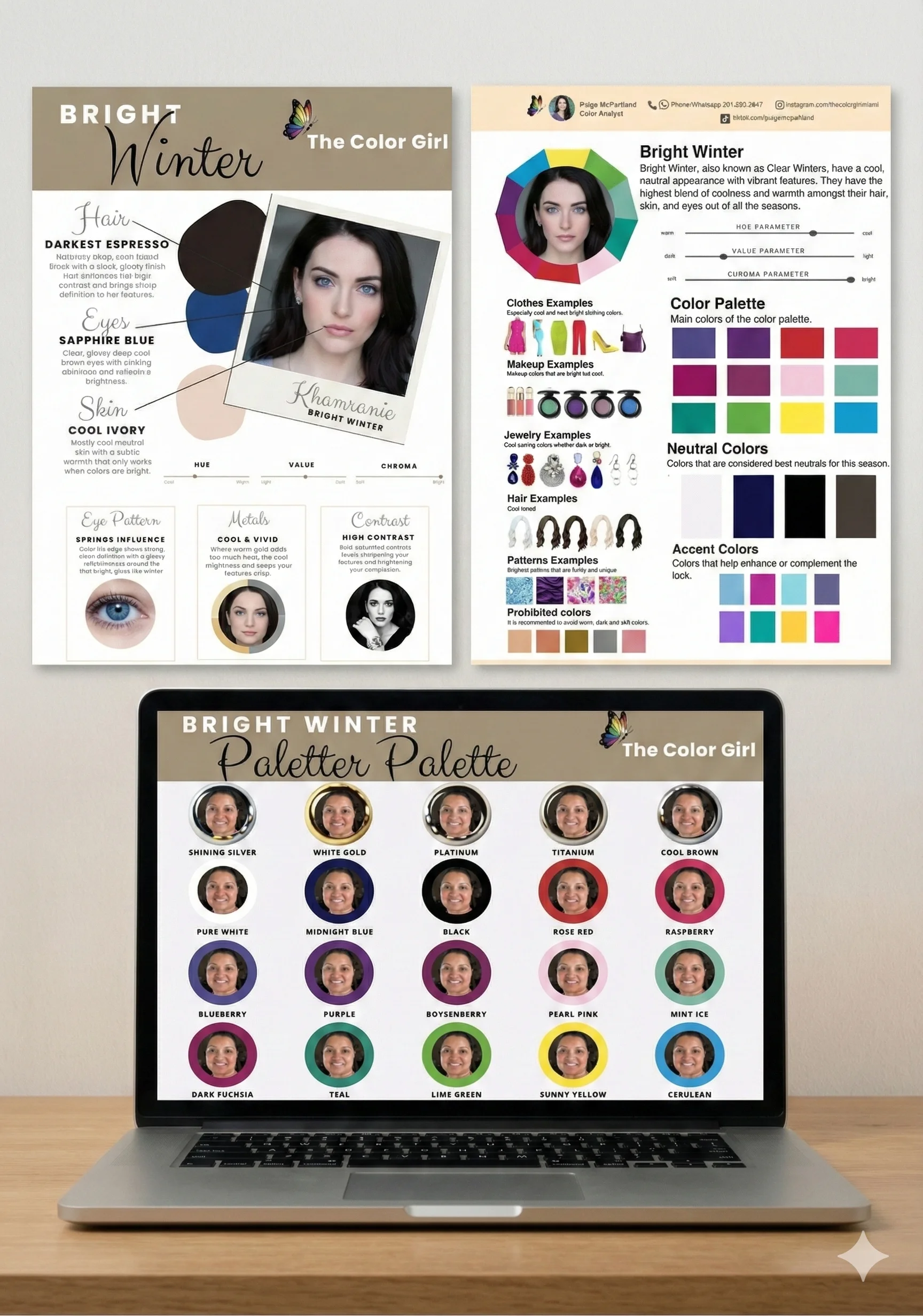
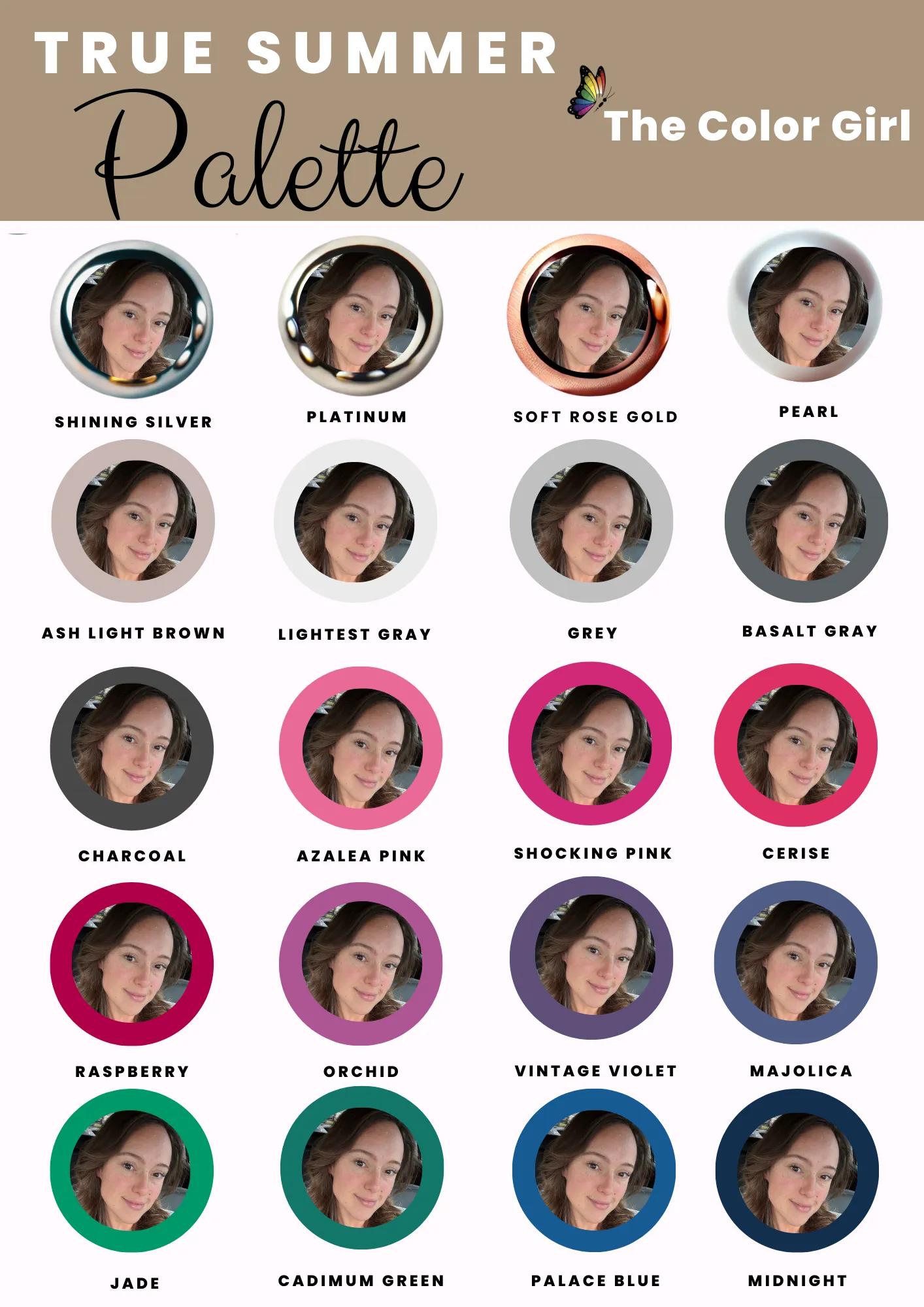
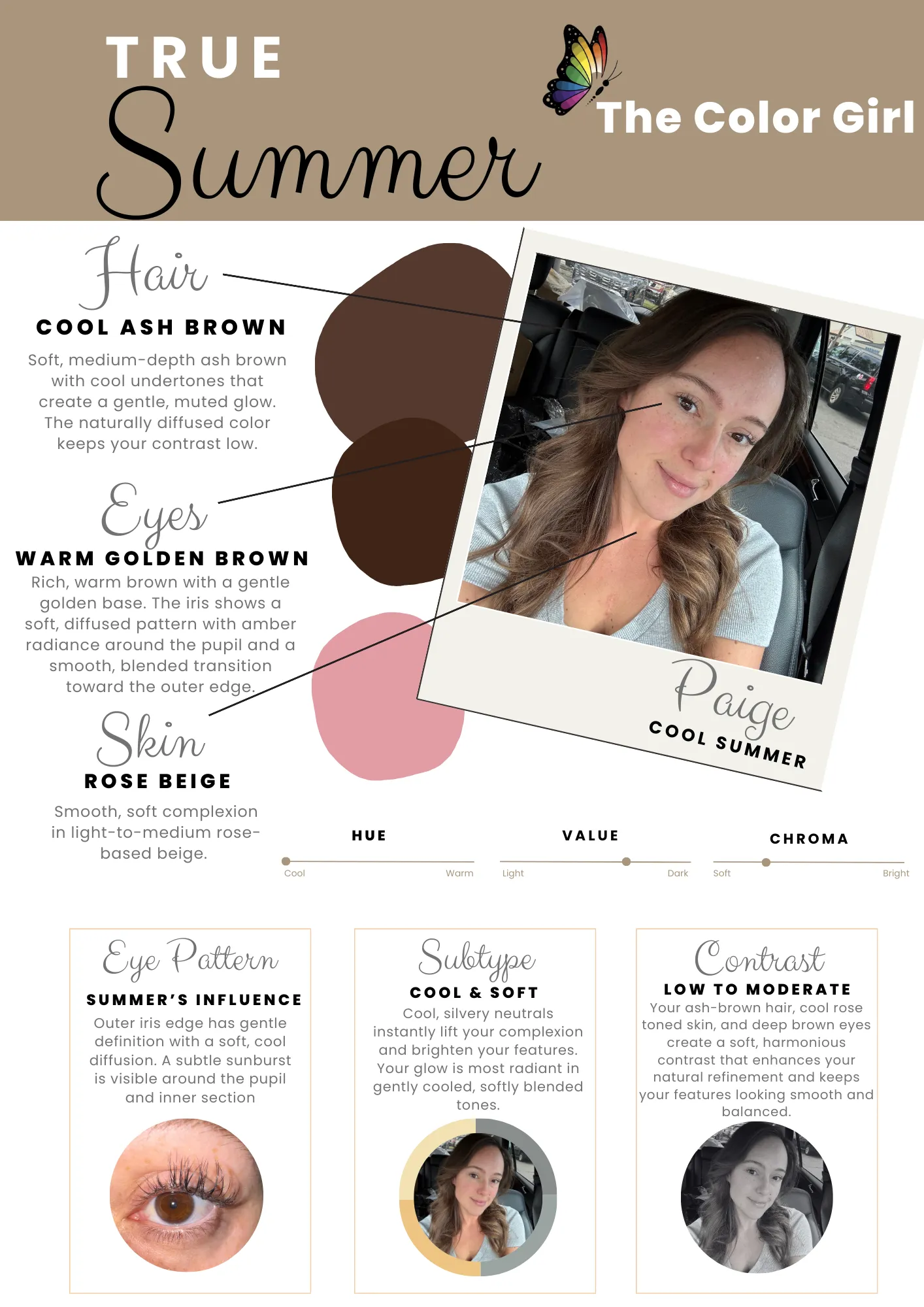
The Color Girl's paid virtual color analysis is personally reviewed by Paige. It is not an instant automated season assignment. Paige reviews multiple natural-light photos, uses digital draping to compare color families, and prepares a report that connects the result to clothing, makeup, jewelry, and hair direction.
Why the distinction matters
The most useful result is not simply a season label. It is an explanation you can apply to clothing, makeup, jewelry, and hair decisions.
An instant estimate may be enough for exploration. Personal review becomes more valuable when you want the analyst to compare close possibilities, explain the reasoning, and connect the result to your actual goals. That does not mean every AI result is wrong or every human result is right. It means the method and the quality of the evidence matter.
Why AI tools often disagree
Different tools can make different assumptions about:
- White balance and camera processing
- Whether surface color or undertone matters more
- How the 12-season system is defined
- Which facial features receive the most weight
- Whether your hair color is natural
- How much contrast or softness the image contains
Your prompt matters too. If you tell a general AI that you have warm skin and green eyes, it may accept those labels and build an answer around them. If your self-assessment is off, the final result can still sound internally consistent.
This is similar to the reason online color analysis quizzes can give different seasons. The tool is often processing your description of yourself, while an analyst is comparing your response to color.
When an AI estimate is enough
AI can be a good fit when the stakes are low and you are curious.
Use it to learn the language of color analysis, build a temporary inspiration board, or identify two seasons worth testing. You can also use it to generate outfit combinations after your season has already been professionally confirmed.
Think of the result as a hypothesis. Test it against real clothing near your face. Notice whether the recommended neutrals, metals, and lip colors work as a group. A correct seasonal direction should create a pattern, not require an excuse for every color that feels wrong.
When personal analysis is worth it
Human review becomes more valuable when you are:
- Stuck between two or more seasons
- Receiving conflicting results from quizzes or apps
- Planning a significant hair color change
- Rebuilding your wardrobe
- Trying to simplify repeated makeup purchases
- Looking for guidance that accounts for dyed hair, redness, or unusual contrast
These are exactly the situations where category-level advice can create more questions than it answers.
Can an online human analysis still be personal?
Yes. Virtual describes the location, not the level of care.
A human analyst can review your photos remotely, request replacements when necessary, compare digital drapes, and prepare individual recommendations. You do not need a video call for the analysis to be personal. You do need a process that gathers enough reliable evidence.
If you are skeptical about photography itself, read Can Virtual Color Analysis Really Work From Photos?. It explains what makes a photo set useful and where the method has limits.
Questions to ask before trusting any result
Whether you choose AI or a person, ask:
- What evidence supports this season?
- Were several color qualities compared, or only undertone?
- Did the method account for lighting and dyed hair?
- Can it explain why the neighboring season is less likely?
- Do the recommended colors work together across clothing, makeup, and neutrals?
A season should not feel like a random label attached to your features. You should be able to understand the pattern behind it.
Frequently asked questions
Is AI color analysis accurate?
Accuracy varies by tool, image quality, and method. An AI result can offer a useful estimate, but one selfie and a confident paragraph do not establish certainty. Treat automated results as exploratory unless the product clearly explains its process and limitations.
Can ChatGPT tell me my color season?
A general AI can discuss your photos and suggest possibilities, but it may be affected by camera color, the prompt, and the details you provide. It is best used to generate questions and tests, not as unquestionable proof.
Does a virtual color analysis use AI?
Some do and some do not. Always check who or what makes the final decision. The Color Girl's paid virtual service is personally analyzed by Paige.
Should I try a free tool before paying for an analysis?
You can. A free estimate may help you learn what you want from a full analysis. If several tools disagree, save the results and note which recommendations felt close. That history can help you explain where you are stuck.
The bottom line
AI is excellent at making color analysis easier to explore. Human analysis is better suited to resolving ambiguity and turning a season into personal guidance. They can complement each other as long as you know which job each one is doing.
If you want a quick starting point, explore The Color Girl app experience. If you want Paige to personally review your photos and prepare your full palette and report, choose a virtual color analysis.
Ready to Discover Your Perfect Colors?
Transform your style with personalized color analysis. Book your session today and see the difference the right colors can make.